
Storytelling through Shadows, Grain, and Diptychs
On the early photographs of Ralph Gibson

In my last Substack, I told the story of how Dorothea Lange admonished her young assistant Ralph Gibson for not having a “point of departure” in his work. I wasn’t familiar with either Gibson or the concept of “point of departure” at the time, so in the days since I’ve gone down a Gibson rabbit hole a bit and want to share what I found.
Although not widely known outside of photography circles, across his 65-year career (now in his 80’s, he is still working), Gibson has been hugely prolific, with over 20 monographs, a 550-page Taschen retrospective, 250+ exhibitions, and numerous awards and museum collections to his name.1
From that vast body of work, what interests me the most, and what I want to discuss here, are samples from the three books that he self published in the 1970’s — The Somnambulist (1970), Deja-Vu (1973), and Days at Sea (1974).2
Overall I have mixed feelings about Gibson’s work, but I think he was at his most inspired during this brief period of his career. In fact, it was The Somnambulist, which took three years and $4000 of his own cash to publish, that launched his reputation.
Story-Telling Diptychs
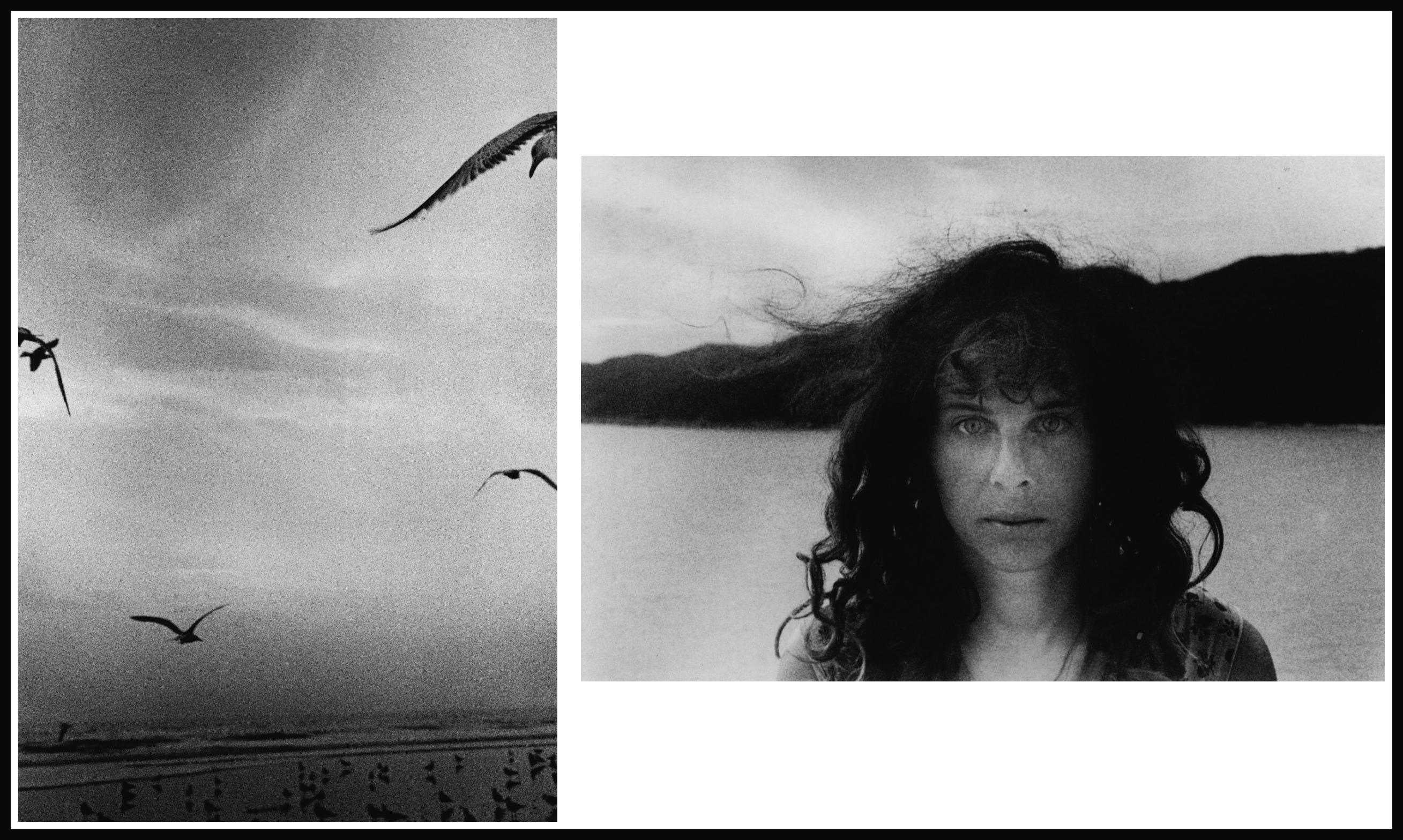
The first thing to understand about Gibson’s approach is how exacting he was at every step of the making of his photography and books. He controlled the entire production line: he was the photographer, darkroom printer, editor, book printer, and book publisher of many of his monographs.
Sequencing was vital to his art, particularly his use of facing pages to tell a story. It’s not much of an exaggeration to say that each of his first three books effectively comprised a series of diptychs laid out as facing pages.
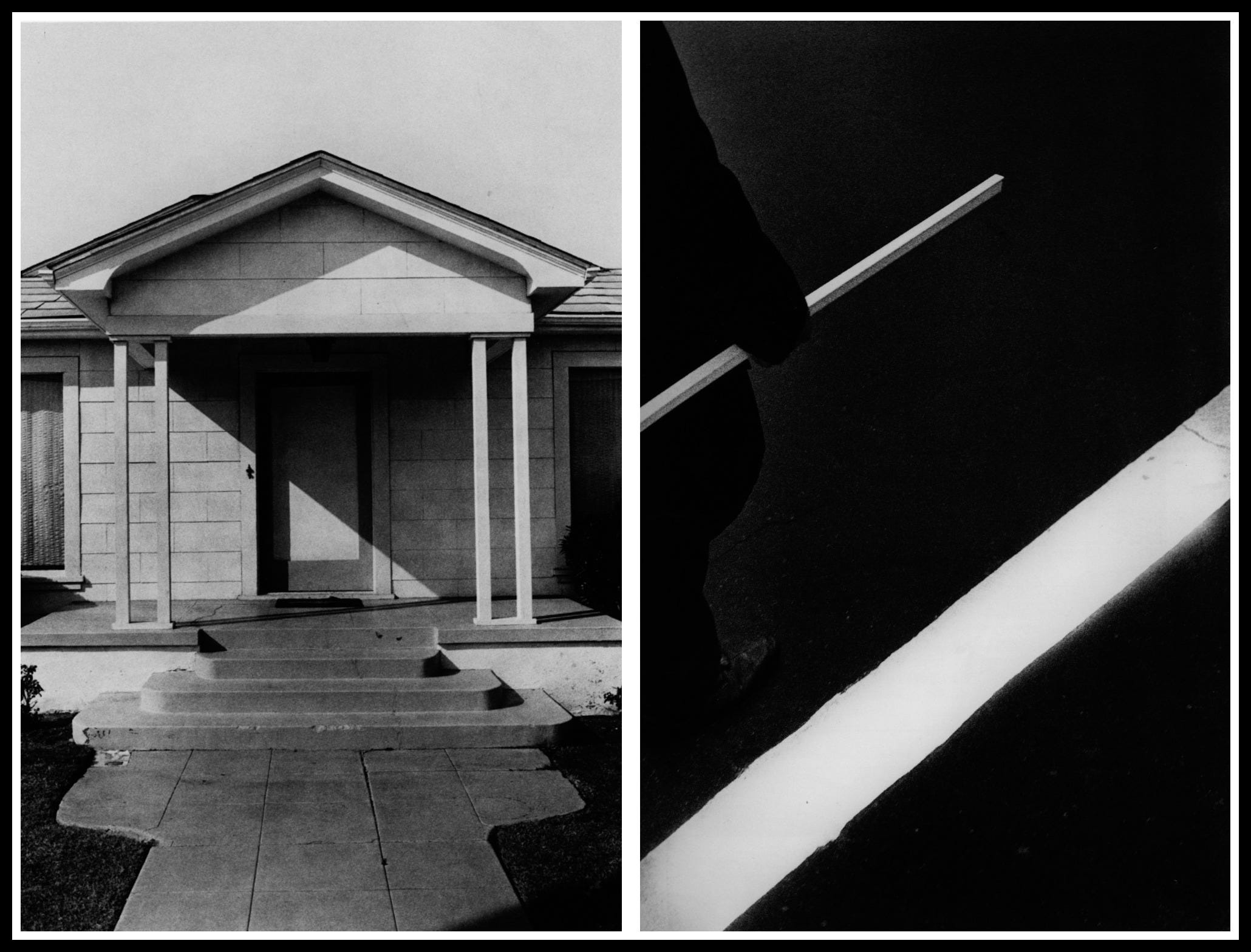
Each of the sets of images I’m sharing here are facing pages from the three monographs. While many of the photographs stand well enough on their own, the pairings create an entirely new context and dialogue between the two.
Leica + Tri-X + Rodinal + Overexposure = Grain
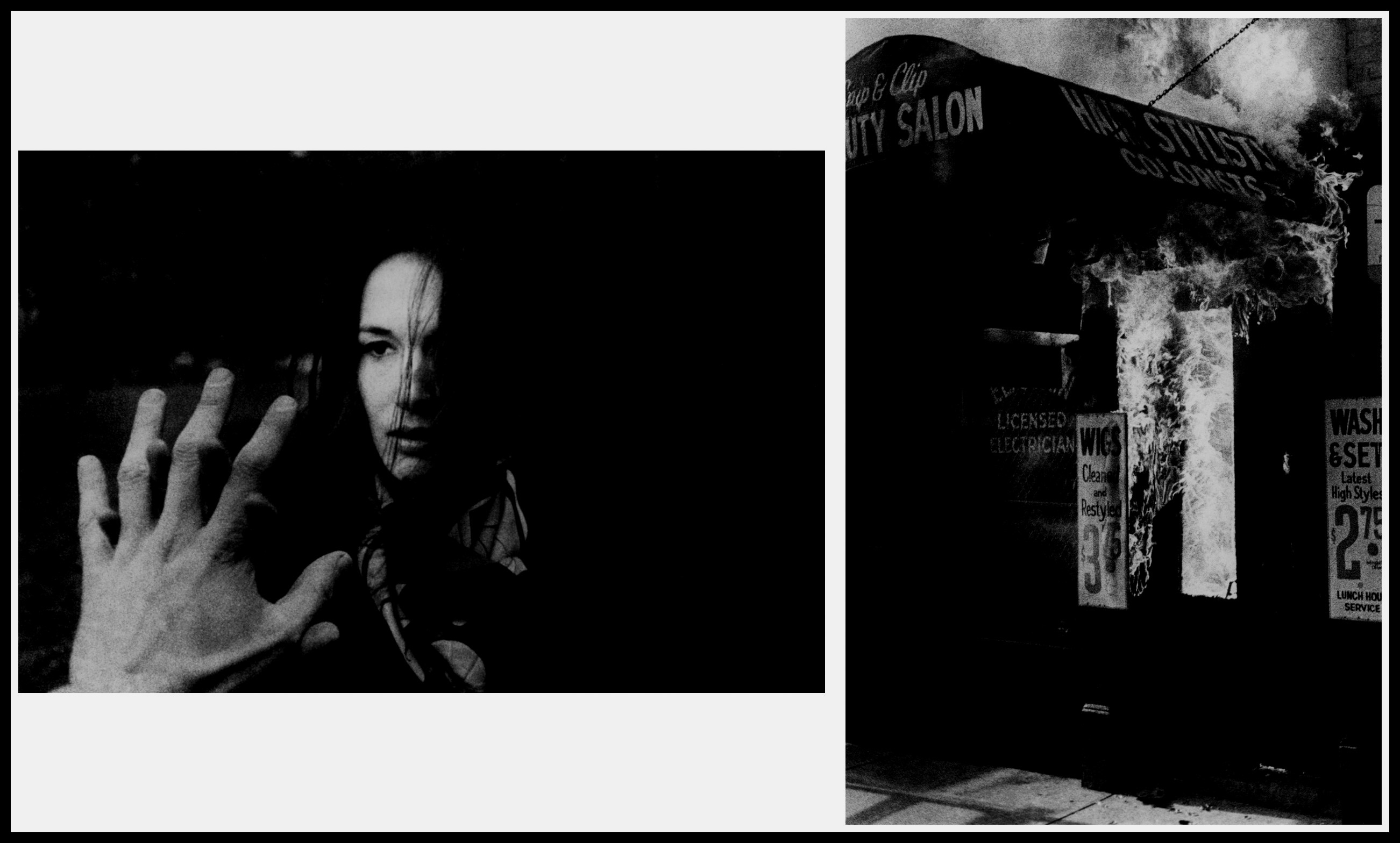
I don’t usually discuss the technicalities of a photographer’s work, but the signature style that Gibson developed during these years and that would define his work through much of his career was in no small part due to his technical skills.
Gibson has been a Leica M Rangefinder man his entire life. Until his conversion to a digital Leica in 2012, he often paired his early Leicas and Summicron lenses with Kodak Tri-X film and Rodinal developer and ignored all rules of “proper” exposure. He often shot in bright light and over-overexposed for the highlights, which meant that he lived in high contrasts, relying on the shadows to form shapes to create the atmosphere he was after. He was not interested in technically perfect prints and seldom showed interest in bringing out the details in shadows.
The film photographers amongst you — if you’ve ever married Tri-X with Rodinal in the development tank, you know about their brood of well-defined grain, especially with thin negatives. Gibson purposefully used grain as a structural element to his photographs and as a way to enhance the images’ themes.
For you non-photographers, what I mean when I say Gibson didn’t care about details in the shadows — look at the highlights and dark areas of each photo and compare what you see to, say, an Ansel Adams print. An apple and orange comparison on nearly every level to be sure, but I want to make a point. In Gibson, you see dark, and you see darker, with little detail showing through either. With Adams, you see many gradations of dark, nearly always conveying detail in both. Gibson simply wasn’t interested in creating beauty or eliciting awe; he exploited his subjects through technique so that they could participate in his story telling, often as shadowy representations, surreal or macabre.
Sexual Power and and Undertone of Violence
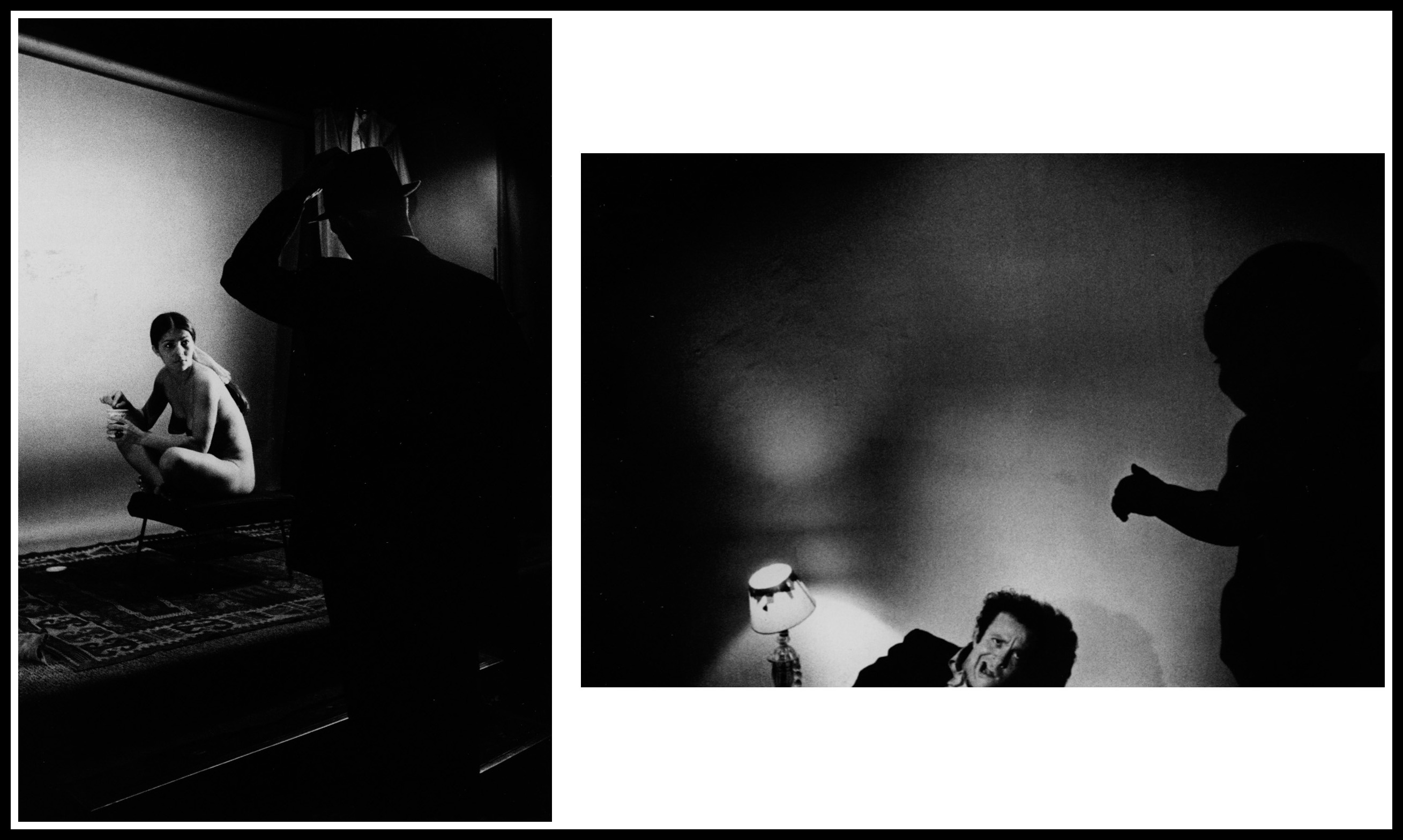
It’s not uncommon to read of Gibson’s work being described as “erotic.” The female nude was essential to his later career. I’ll grant that much of it is sensual, even erotic at times, but it’s more accurate to say that his use of the female body was too complex to be reduced to any single descriptor.
Especially in these early works, Gibson’s “point of departure” — the motive behind the photos — was often an idea that he conveyed through sexuality that was laden with violent undertones and power dynamics.
The Dialogue of Tonality
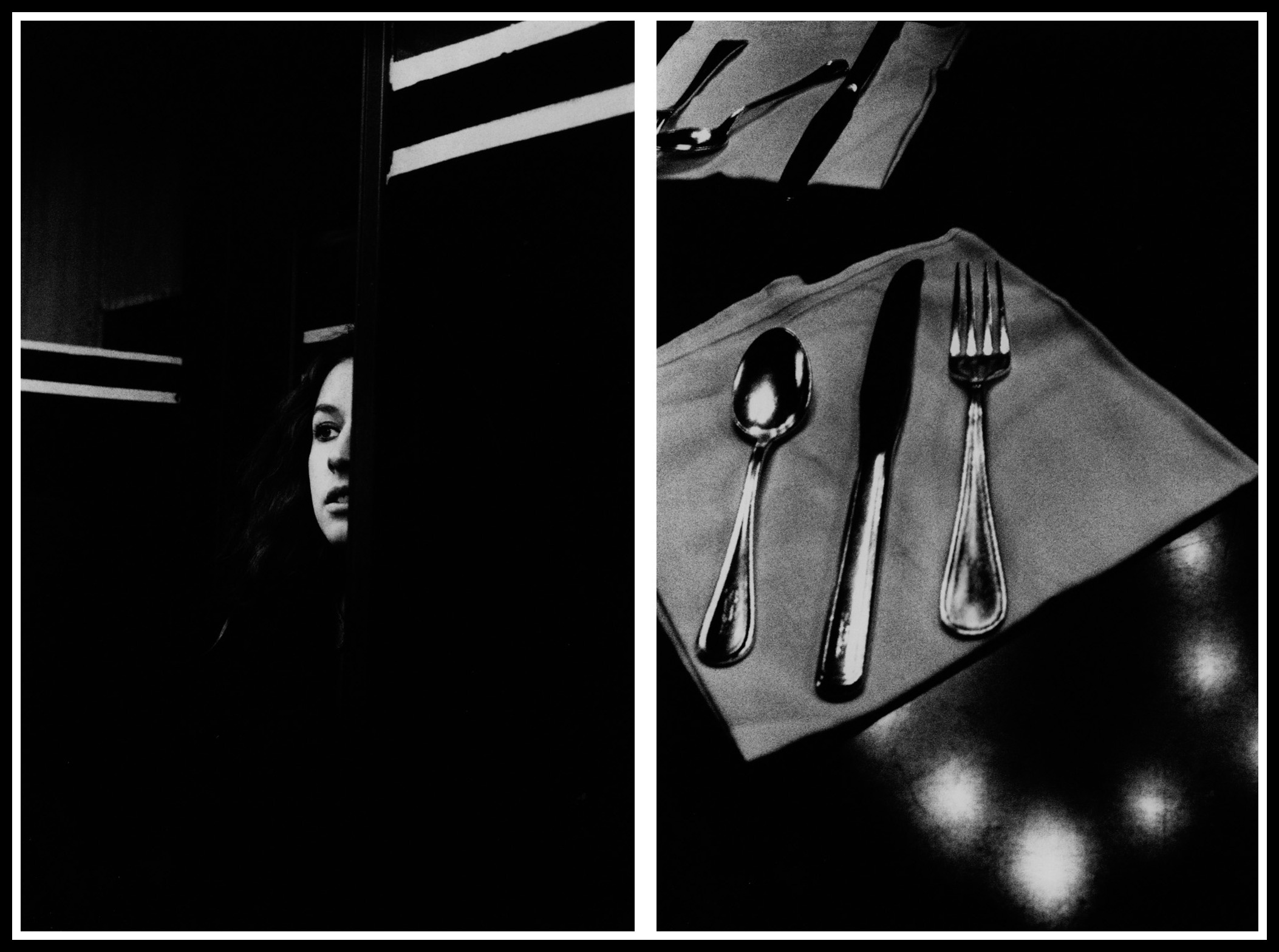
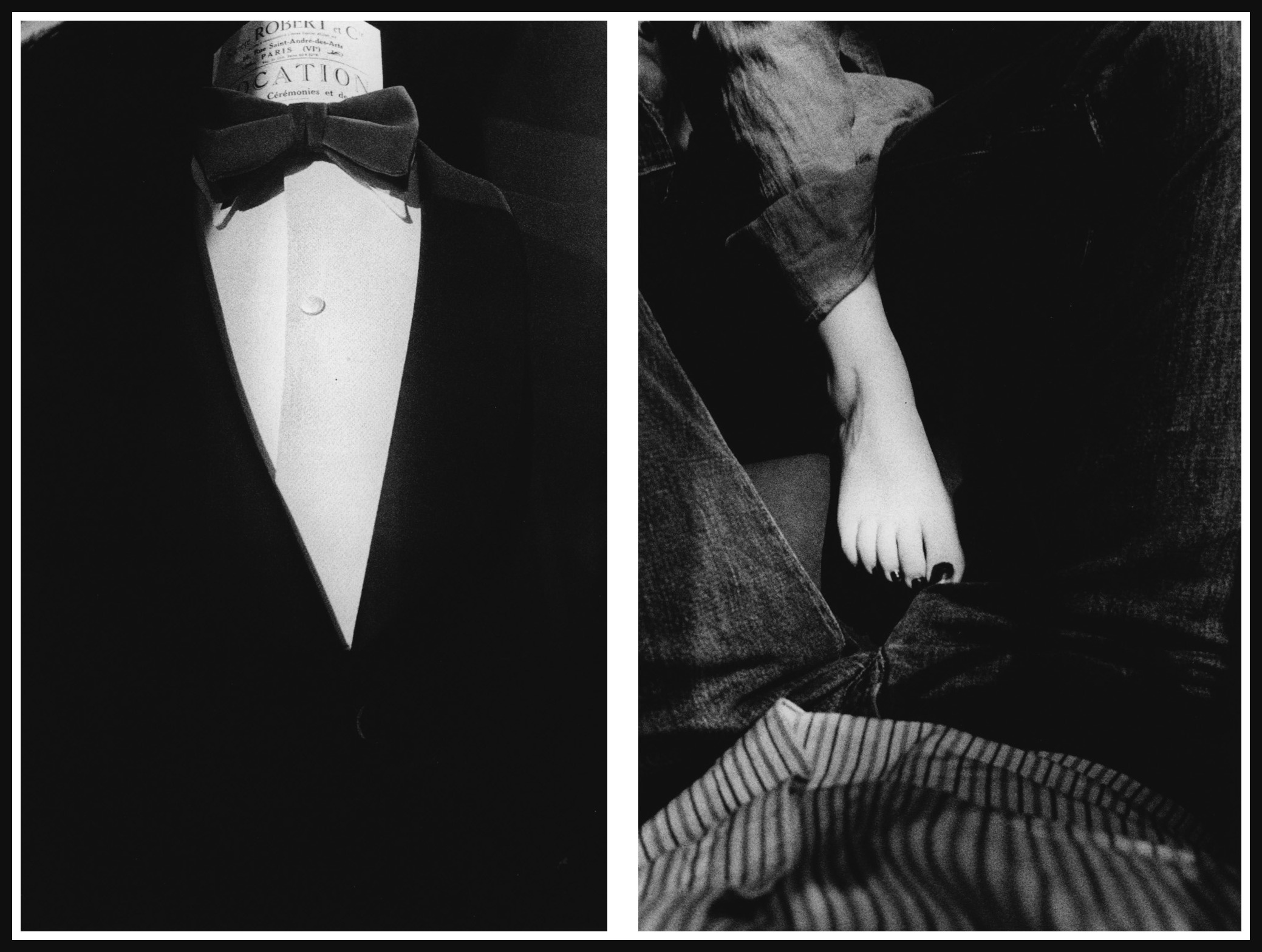
Gibson was a master darkroom printer. We can discuss the “ideas” conveyed in the imagery of these diptychs, but without his mastering of tonality — the way he could elicit the dark and light tones from his prints in the darkroom — many of those ideas couldn’t be told, or couldn’t be well-told at any rate. The shadowy figures, the bright lines, the clean angles created at the intersections of dark and light — his technical mastery supplemented the subjects he used to convey his vision. And completely separate from his subject matter, his “ideas” were often drawn from what his eyes perceived. He learned to trust and follow his eyes, oftentimes allowing the tonality of the prints itself to tell stories.
The Stories Outside the Frames
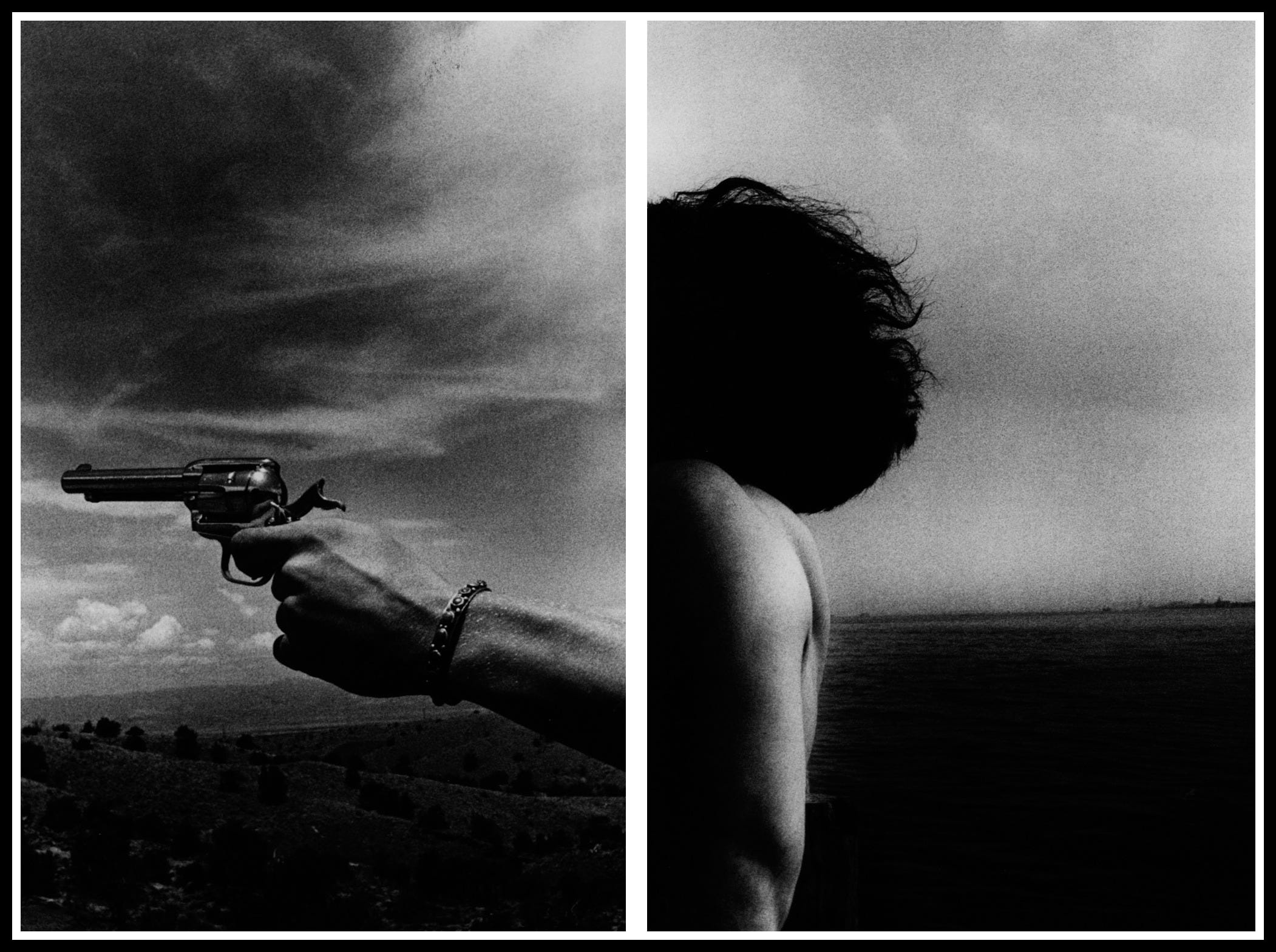
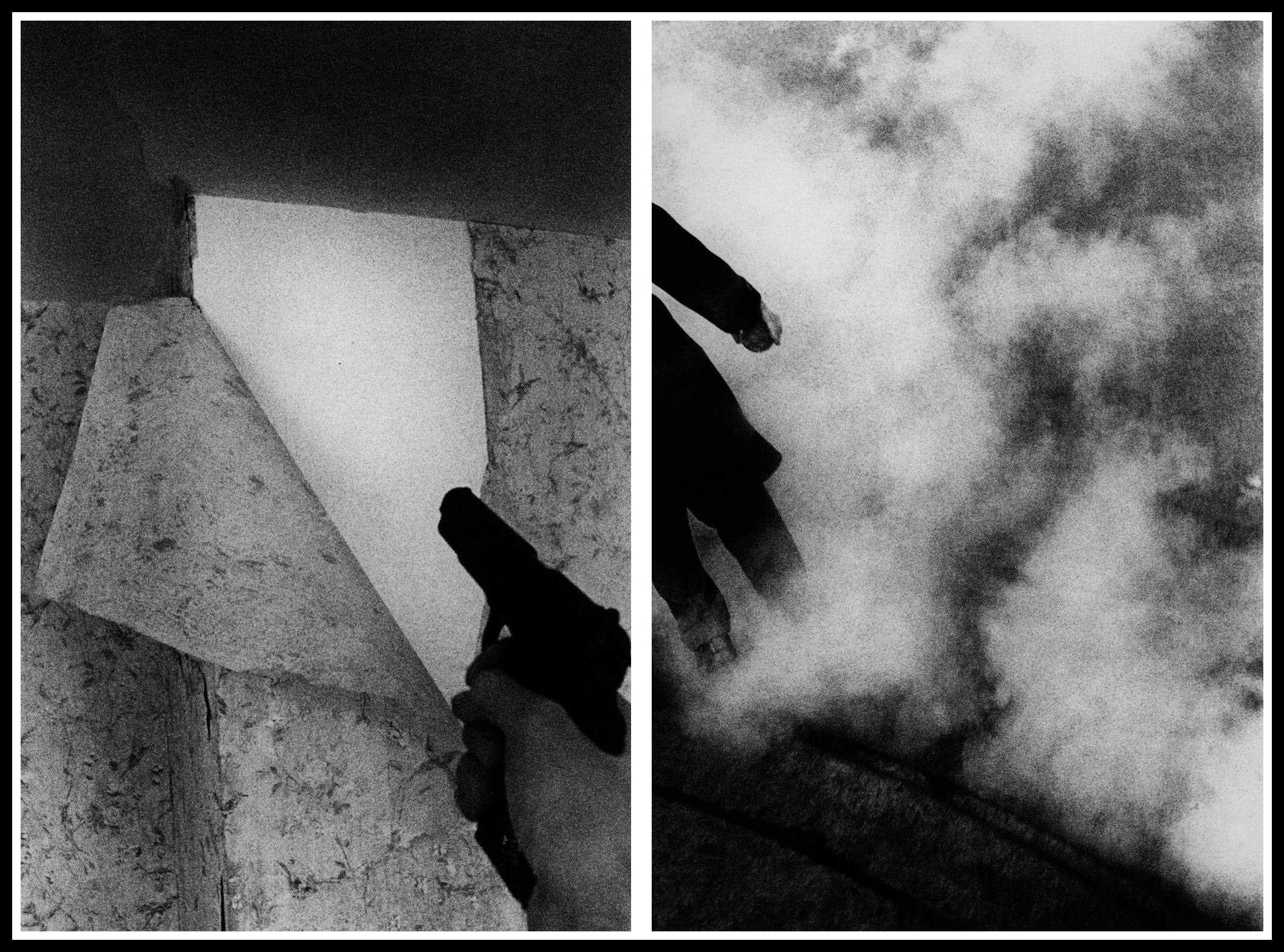
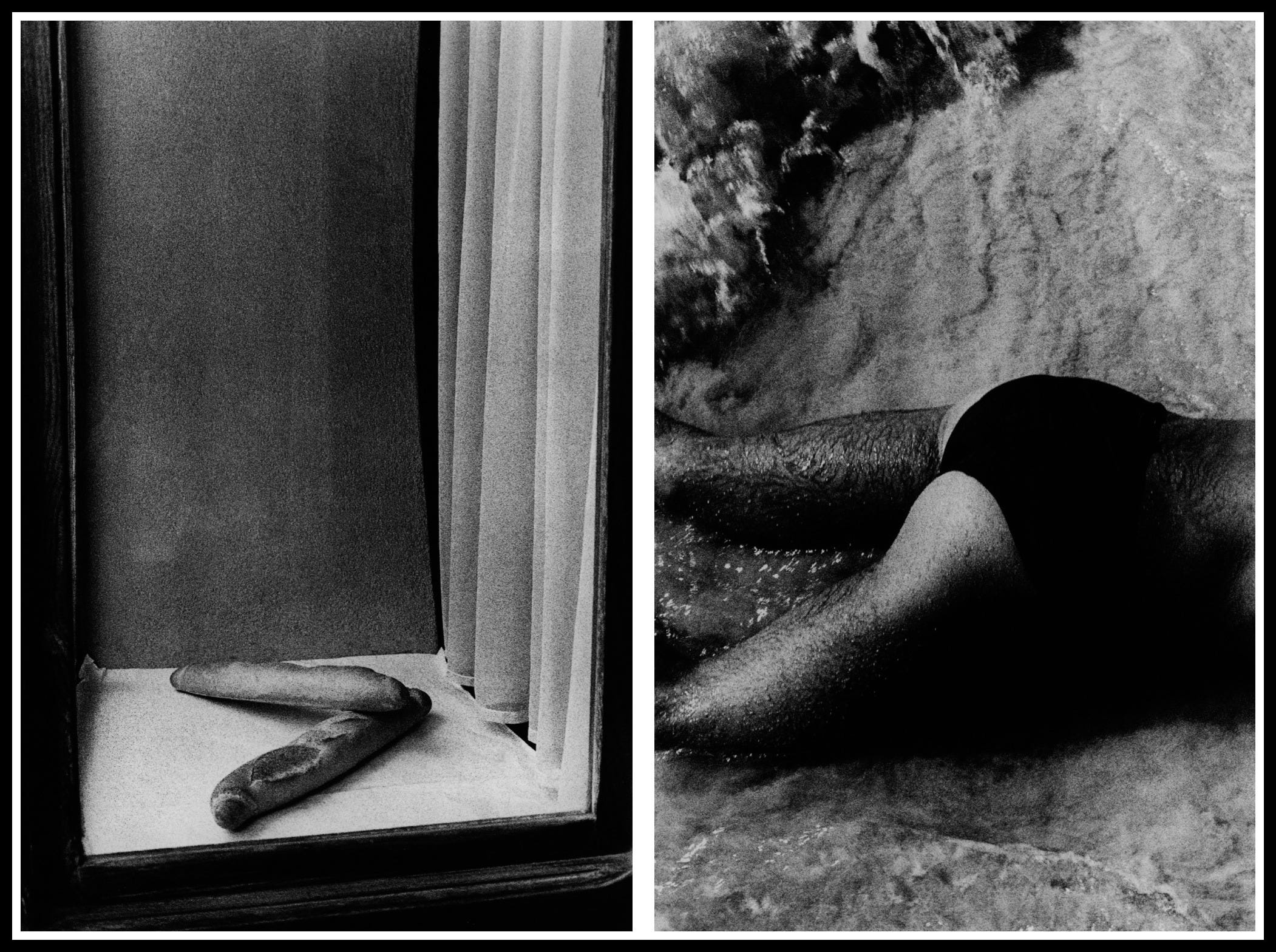
There’s a lot to unpack with early Gibson. Like an aspiring rock star producing his first records, Gibson set out to prove himself by bringing his full range of ideas and technique to his first books. In these three diptychs alone, you can see how he’s undeterred by the limits of the framing. The widest angle lens he would use — and sparingly at that — was a 50mm. He preferred a 90mm or higher. He wanted to reveal less, not more, through tight crops, and he often said that he relied on the rangefinder to let him see the narrative unfolding outside of the viewfinder’s framing lines. He told stories that continued beyond the photograph’s borders. In these three diptychs, you can see the explicit interaction of the individual photographs with their facing counterparts, and how the subjects exist both within and outside our view.
I have several issues with Gibson’s work, two of which are represented in these three diptychs.
He’s often heavy handed. The best of his juxtapositions leave room for interpretation and mystery; the least of them — such as these three — could be included in a scene from a Dashiell Hammett potboiler or a Hitchcock movie. They’re playful, with a touch of shock, but not thoughtful.
My larger criticism, which extends to the whole of his catalog, is that Gibson is an intellectual’s photographer. Not that he espouses lofty ideas beyond the reach of us plebes; what I mean is that I find little heart in his work. As brilliant as these three books are, not a single image, or a single diptych, rouses me with emotion, save for the shuddering horror a few of them emit. They each invite me — and many of them force me — to think, but they don’t ask me to feel much of anything.
But I still think they’re brilliant.
As always, thank you for your eyes.
If you’re familiar with Taschen books, you know that they’re tomes. Gibson’s retrospective, which I was forced to purchase because his monographs can’t be found for less than $100 in the collectible’s market, comes in at 540 pages. It makes the act of “enjoying” photography nearly impossible. You try taking a 6-pound (2.7 kilo) hardcover to your favorite pub to relax with. Ralph Gibson: Photographs 1960-2024. (Taschen, 2025)
Gibson published each of these books through his own Lustrum Press. In 2018 they were combined into a single volume, The Black Trilogy (University of Texas Press.)
in 2001, I made an ass of myself in front of Gibson. My girlfriend and I went to the opening of a retrospective of his at the Corcoran Gallery in DC. I was new to his work. He was going to give a talk at 7 p.m., and we sat in the back row where there were some seats left. 7:05: Hasn't started yet. 7:10: Still nothing. 7:15: I'm getting a little impatient. I turn to my girlfriend and say something to the extent of, "When's Mr. Bigshot going to show up?" The guy immediately to my right stands up, walks down the aisle, gets on stage, and gets introduced by the Corcoran staff. Yup, it was Gibson. I got "Deus Ex Machina" that night and, embarrassment aside, it's one of my favorite photo books.
Ralph Gibson had a profound influence on my delevopment as a photographer. As a kid, highschool, I first encountered his photograph of Mary Ellen Mark. He was reaching out to her in the dream like image. I was 16 and didn't really understand what I was looking at, but it stuck with me. A few years later I found the Theory series on books published by Lustrum Press and more of Gibsons work. His photographs are for me the idea that one can make photographs that capture dreams or subconsciece thoughts and that these are somehow shared among other people. His work validated my thought that art doesn't need to show whats never been seen before but to connect with the viewer that "yes I know this" or "I've had that dream" or the vague deja vu.